
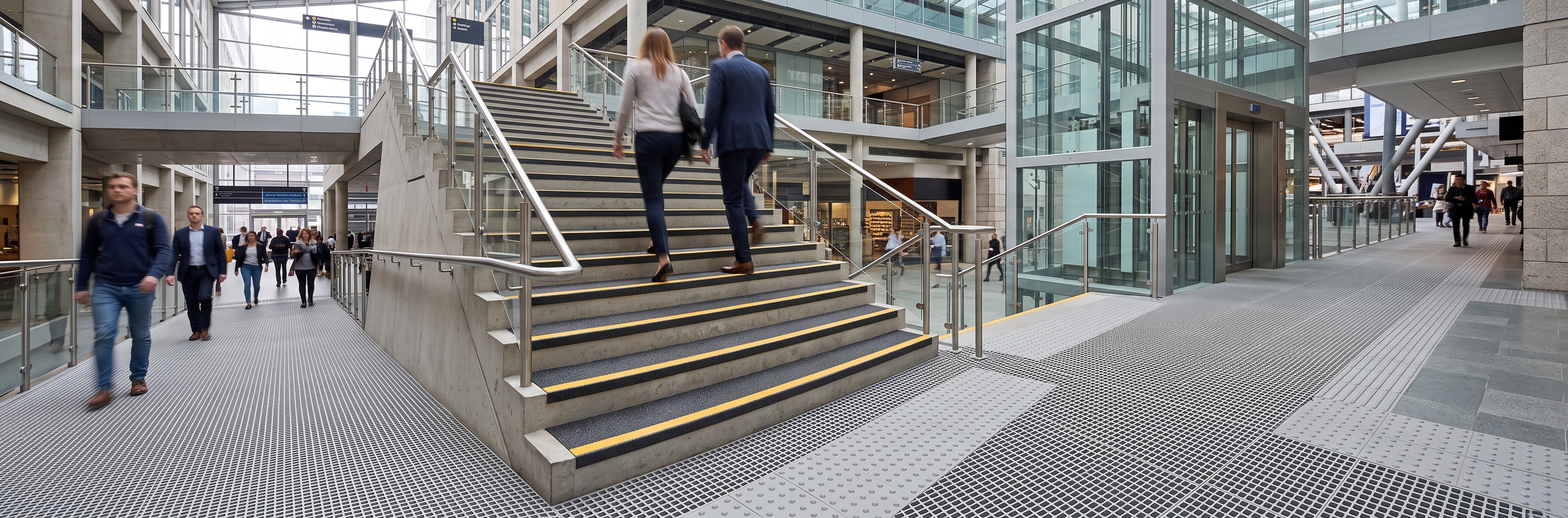
The UK construction and infrastructure sector is going through a noticeable shift. With rising material costs, stricter safety regulations, and unpredictable weather conditions, businesses are actively searching for smarter, more reliable solutions. This is where GRP (Glass Reinforced Plastic) products are stepping into the spotlight.
You might have noticed GRP being mentioned more frequently in industries like construction, transport, and public infrastructure, but what exactly is it, and why is it suddenly everywhere?
What’s really driving its popularity right now is the growing demand for safety-focused and anti-slip solutions. From staircases in public buildings to walkways and industrial flooring, GRP products are helping reduce accidents while also cutting long-term costs.
Simple Explanation of GRP Products
When people first hear the term GRP products, it can sound a bit technical. But in reality, the idea is quite simple. GRP stands for Glass Reinforced Plastic. It is a composite material made by combining plastic resin with strong glass fibres. This mix creates a material that is much tougher than ordinary plastic, while also being lighter and easier to handle than many traditional construction materials.
One reason GRP products are becoming more common across the UK is that they solve several problems at once. They are strong, resistant to water and corrosion, and they perform well in both indoor and outdoor settings. In a country where rain, damp conditions, and long-term wear are constant concerns, that makes a big difference.
What is Glass Reinforced Plastic (GRP)?
A simple way to think about GRP is this: it is a material designed to offer the strength of heavier options without all the usual downsides. Steel can rust. Wood can rot, warp, or need regular treatment. Standard plastic may not be strong enough for demanding environments. GRP sits in a very useful middle ground. It is lightweight, but still strong enough for commercial, industrial, and public-use applications.
People also sometimes confuse GRP with fibreglass, and in many everyday conversations, the two terms are used almost interchangeably. In practical product terms, GRP refers to finished items made from this reinforced material, such as covers, sheets, grating, and anti-slip safety products. What matters most for buyers is the benefit: a reliable material that lasts for years without demanding constant maintenance.
This is exactly why GRP has become attractive for property owners, contractors, facilities managers, and local authorities in the UK. It delivers durability without creating extra work later on.
Key Uses of GRP Within the UK Market
GRP is now used in many places that people pass by every day, often without even noticing it. In commercial buildings, it appears on staircases, access points, and walkways. In industrial settings, it is used for flooring, grating, and platforms where slip resistance and strength matter. In public spaces, it supports safer movement through products like tactile paving and stair safety covers.
Popular GRP products and where they're used:
- Stair tread and nosing covers — widely installed in schools, stations, offices, and apartment buildings to improve grip and reduce slip risk on worn or heavily used stairs
- Anti-slip decking strips — ideal for timber walkways, ramps, and outdoor decking, where wet UK weather can quickly create hazards
- GRP flooring flat sheets and grating — a preferred choice for industrial and commercial spaces due to their strength and resistance to water, chemicals, and corrosion
- Surface-mounted tactile paving — supports accessibility standards by helping create safer environments for visually impaired pedestrians in transport hubs and public pathways
Taken together, these applications show that GRP is no longer a niche material. It has become a practical, modern solution that meets the real-world demands of UK buildings, infrastructure, and safety standards.
Explore the Types of GRP Products
GRP products come in a wide range of forms, each designed to solve specific safety and durability challenges. Below are the most commonly used GRP solutions in the UK, along with where and why they’re used:
1. GRP Stair Tread Covers
Designed to improve grip on existing stairs, especially in high-traffic areas. These covers are widely used in schools, train stations, and commercial buildings across the UK. They help reduce slip risks, meet safety standards, and extend the life of worn staircases without full replacement.
2. Stair Nosing Covers
Installed on the edge of steps to provide extra visibility and slip resistance. Ideal for both indoor and outdoor staircases, particularly in public buildings. They are often used to comply with UK health and safety regulations while also improving step durability.
3. Anti-Slip Decking Strips
Perfect for outdoor environments such as ramps, bridges, walkways, and decking areas. These strips are highly effective in the UK’s wet weather, providing strong grip even in rain or frost. They are a simple, cost-effective upgrade for improving safety on slippery surfaces.
4. GRP Flooring Flat Sheets
Used in industrial and commercial flooring where durability and resistance are essential. These sheets are strong, lightweight, and resistant to chemicals, moisture, and corrosion—making them ideal for warehouses, factories, and plant rooms.
5. GRP Grating
A heavy-duty flooring solution commonly used in industrial settings, drainage areas, and walkways. GRP grating allows water and debris to pass through while maintaining a strong, anti-slip surface. It’s a popular alternative to steel grating due to its non-corrosive properties.
6. Surface-Mounted Tactile Paving
Specifically designed to improve accessibility for visually impaired individuals. Commonly installed in public spaces such as train stations, crossings, and pavements across the UK. These surfaces provide clear tactile feedback, helping users navigate safely and confidently.
Each of these GRP products plays a key role in improving safety, durability, and long-term cost efficiency, which is exactly why they are becoming standard across UK construction and infrastructure projects.
Why GRP Products Are So Popular in the UK Right Now
| Key Factor | Explanation | Why It Matters in the UK |
|---|---|---|
| Safety & Anti-Slip Demand | GRP products like stair tread covers, grating, and decking strips are designed to provide a strong grip and reduce slip risks. | With strict UK safety regulations and high foot traffic in public spaces, reducing accidents is a top priority. |
| Cost-Effective & Low Maintenance | GRP does not rust, rot, or require frequent repairs, unlike steel or wood. | Businesses and local authorities save money on maintenance and long-term repairs. |
| Weather Resistance | GRP is highly resistant to rain, moisture, and temperature changes. | Ideal for the UK’s wet and unpredictable climate where traditional materials often fail. |
| Durability & Long Lifespan | Strong and long-lasting material that can handle heavy use without damage. | Reduces the need for frequent replacements in commercial and industrial settings. |
| Sustainability & Eco-Friendly | Longer lifespan means less waste and fewer replacements over time. | Supports the UK’s growing focus on sustainable construction practices. |
| Versatility Across Industries | Used in construction, transport, public infrastructure, and industrial environments. | Makes GRP a flexible solution for multiple UK sectors and applications. |
Still Wondering About GRP? Let’s Clear It Up
Q: Are GRP and fibreglass the same thing?
A: They’re very similar and often used interchangeably. Fibreglass usually refers to the raw material, while GRP is the finished product made from it. For most buyers, the difference isn’t something you need to worry about—the benefits are essentially the same.
Q: Are GRP products expensive?
A: They might seem slightly higher in upfront cost compared to some traditional materials, but they usually save money in the long run. Since they require very little maintenance and last a long time, the overall cost is often lower over time.
GRP Isn’t Just a Trend; It’s the Future of Safer Construction
GRP products are no longer just an alternative; they’re quickly becoming the preferred choice across the UK. From improving safety on slippery stairs to providing long-lasting industrial flooring, GRP offers a solution that fits today’s real-world challenges.
What makes it stand out is how it combines everything that modern projects need. It’s strong but lightweight, durable but low maintenance, and most importantly, designed with safety in mind. In a country like the UK, where wet weather and strict regulations are part of everyday life, having materials that can handle both is a huge advantage.
If you’re planning a project or looking to upgrade existing spaces, now is the right time to consider GRP solutions. Explore Krucx, from stair tread covers and anti-slip decking strips to grating and tactile paving; there’s a GRP product designed for almost every need.