
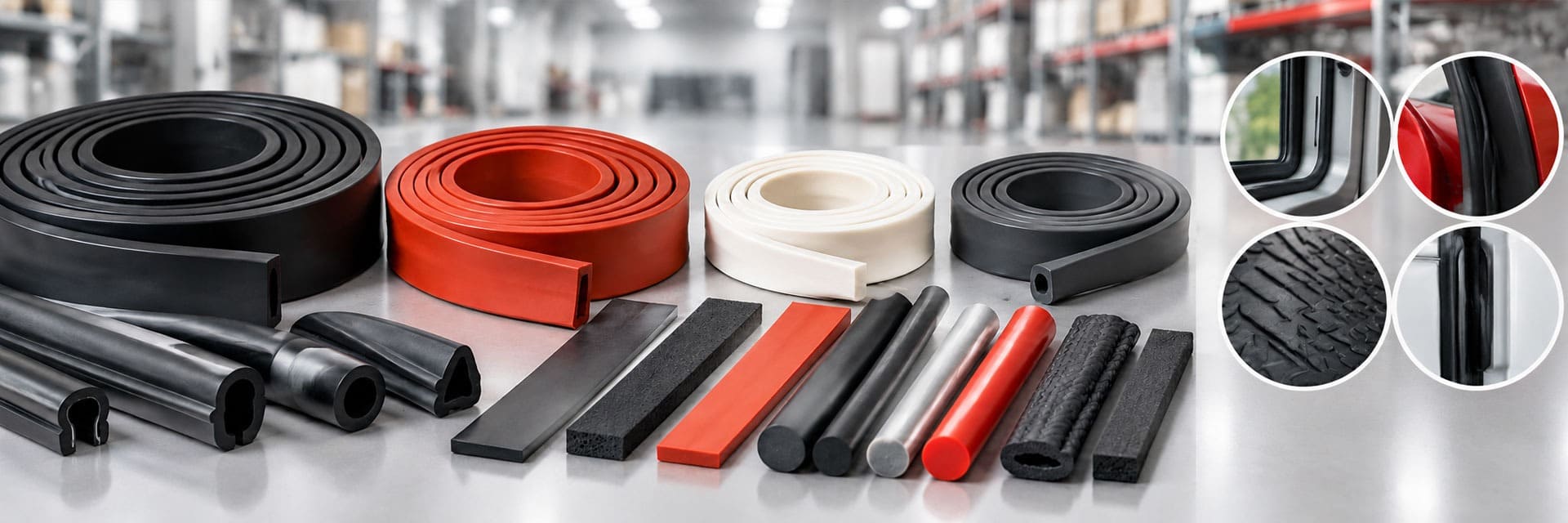
If you've ever tried to stop a draughty door, cushion a piece of machinery, or seal a gap against the weather, chances are rubber strips were part of the solution. They're a simple product on the surface, but the material you choose has a real impact on how well they perform, and for how long.
This guide covers the main types of rubber strips available, where each one works best, and the key things to think about before you buy — so you can pick a material that actually suits the job rather than just the price tag.
Why the Right Material Makes All the Difference
Not all rubber is created equal. Some rubber strip materials are built to shrug off UV light and years of rain; others are better suited to indoor cushioning or high-temperature sealing. Picking the wrong one doesn't necessarily mean instant failure — but it often means a shorter lifespan, a weaker seal, or more frequent replacement than you'd bargained for.
Before comparing materials, it helps to understand what rubber strips actually are and how they're typically supplied.
What Are Rubber Strips, Exactly?
Rubber strips are flexible lengths of rubber, usually sold by the metre or in rolls, used for sealing, cushioning, insulating, and filling gaps. They come in a range of:
- Thicknesses, from thin strips a few millimetres deep to thicker, heavy-duty profiles
- Widths, suited to anything from narrow gaps to broader sealing runs
- Profiles, including flat strips, D-sections, and box sections
- Finishes, including plain-backed strips and self-adhesive versions for easier fitting
They're used throughout construction, manufacturing, automotive work, and general maintenance — anywhere a flexible, resilient material is needed to seal, cushion, or absorb movement.
The Main Types of Rubber Strip
1. Neoprene Rubber Strip
A neoprene rubber strip is often the default choice for general-purpose sealing and cushioning. It offers a solid balance of flexibility, weather resistance, and everyday durability, holding up well against moderate oil and chemical exposure without needing to perform in extreme conditions.
You'll typically find it used for gasket strips, vibration dampening on equipment mounts, and general sealing where a dependable, all-round material is more important than specialist performance.
2. EPDM Rubber Strip
EPDM rubber strip is the material most associated with outdoor durability. Its strong resistance to UV, ozone, and general weathering makes it a natural fit for construction and glazing work, including doors, windows, and external sealing that's exposed to the elements year-round.
It's also common in automotive applications such as door and boot seals, where flexibility and long-term weather resistance both matter.
3. Silicone Rubber Strip
Silicone rubber strip stands out for its consistency across a wide temperature range. It doesn't degrade as quickly as some materials when exposed to sustained heat, cold, or UV light, which makes it a reliable option where performance needs to stay stable over time.
It's frequently specified in industrial sealing, equipment gaskets, and settings where fluctuating temperatures rule out less stable materials.
4. PVC Nitrile Rubber Strip
PVC nitrile rubber strip combines PVC and nitrile rubber into a dense, closed-cell material that resists water absorption and holds up reasonably well against oils and mild chemicals. This makes it a practical choice in environments where a strip might come into occasional contact with fuels, lubricants, or general workshop grime without breaking down quickly.
Its cushioning properties also make it useful for gap filling and vibration reduction, particularly in cabinets, enclosures, and automotive or machinery gaskets. It's a dependable, cost-effective option where extreme temperature performance isn't the main priority, but resistance to moisture and light chemical exposure is.
5. Self-Adhesive Rubber Strips
Self-adhesive rubber strips take any of the above materials and add an adhesive backing, so installation is a matter of peeling and sticking rather than drilling or fixing. They're widely used for draught proofing, noise reduction, and cushioning in both commercial and domestic settings, particularly where a quick, low-mess installation is the priority.
Material Comparison at a Glance
| Material | Temperature Resistance | Weather Resistance | Water Resistance | Flexibility | Best Suited To |
|---|---|---|---|---|---|
| Neoprene | Good | Good | Moderate | Good | General sealing & cushioning |
| EPDM | Good | Excellent | Good | Good | Outdoor & external sealing |
| Silicone | Excellent | Good | Moderate | Excellent | High/low-temp sealing |
| PVC Nitrile Rubber | Moderate | Moderate | Good | Good | Cushioning, oil-exposed areas |
Figures vary between manufacturers, so treat this as a general guide rather than a specification sheet.
Everyday and Industrial Applications
Rubber sealing strips and rubber profiles turn up in more places than most people expect, including:
- Door and window sealing for draught and weather protection
- Industrial machinery, for cushioning and vibration reduction
- Automotive weatherstripping and boot or door seals
- HVAC ductwork and equipment housings
- Glazing and general construction sealing
- Electrical enclosures, protecting against dust and moisture
- Marine settings, where suitably rated materials are used
- Noise reduction between surfaces
- General gap filling and weatherproofing
How to Choose the Right Rubber Strip
A few practical questions will narrow down the right material fairly quickly:
- Where will it be used? Indoor applications have more flexibility; outdoor ones need strong UV and weather resistance.
- What temperatures will it face? Silicone rubber strip handles extremes better than most alternatives.
- Will it contact oils, fuels, or chemicals? PVC nitrile rubber strip and neoprene generally cope better here.
- What thickness and width does the gap need? Measure accurately rather than estimating.
- Would self-adhesive backing simplify installation? Useful for lighter-duty jobs on clean, dry surfaces.
- How long does it need to last? Weigh the upfront cost against expected service life.
Is Self-Adhesive Worth It?
Self-adhesive rubber strips are genuinely convenient — no fixings, no extra adhesive, and a quick application process. The trade-off is that adhesive backing depends heavily on surface preparation. Clean, dry, smooth surfaces give the best bond; dusty, damp, or uneven surfaces can shorten the strip's effective life considerably.
They're best suited to lighter tasks like draught proofing, noise reduction, and general gap filling, rather than heavy structural or high-compression applications where mechanical fixing is more reliable.
Rubber Strips from Krucx
At Krucx, we stock a range of rubber strip materials, including neoprene, EPDM, silicone, PVC nitrile rubber, and self-adhesive options, so you can find a rubber sealing solution that matches your specific application rather than settling for a one-size-fits-all product.
Questions to Ask Before You Buy
Q: What are rubber strips used for?
Rubber strips are used for sealing, cushioning, insulating, and gap filling across a wide range of settings, including construction, automotive manufacturing, industrial equipment, HVAC systems, and general maintenance work. Their flexibility makes them useful anywhere a surface needs protecting, a gap needs closing, or vibration and noise need reducing.
Q: Which rubber strip is best for outdoor use?
EPDM rubber strip is generally the strongest choice for outdoor exposure, thanks to its resistance to UV light, ozone, and general weathering. It's widely used for external doors, windows, glazing, and automotive seals precisely because it holds up well over years of exposure to sun, rain, and temperature swings without becoming brittle or cracking.
Q: What's the difference between EPDM and neoprene rubber strips?
EPDM offers stronger long-term weather and UV resistance, which makes it the better choice for prolonged outdoor exposure. Neoprene, by comparison, provides solid general-purpose performance with good flexibility and moderate weather resistance, making it a versatile option for both indoor use and outdoor applications.
Q: Can silicone rubber strips withstand high temperatures?
Yes, silicone rubber strips perform consistently across a wide temperature range, including sustained heat, without losing their flexibility or sealing properties as quickly as some other materials. This makes it a common choice for applications where temperatures fluctuate significantly or where equipment regularly runs hot.
Making the Right Choice
Choosing the right rubber strip comes down to matching the material's properties to the demands of the job, whether that's weather resistance, temperature tolerance, or ease of installation. Get that right, and you'll get a longer-lasting, more effective seal with less maintenance down the line.
If you're still unsure which material suits your project, start with the environment. Outdoor and weather-exposed applications tend to point towards EPDM, temperature-critical settings lean towards silicone, budget-conscious indoor cushioning often suits neoprene or PVC nitrile rubber, and anything needing a fast, fixings-free installation is well served by a self-adhesive option. From there, thickness, width, and hardness can be fine-tuned to your specific gap or surface.
Take a look at the rubber strip options available from Krucx to find the right material for your next project.