
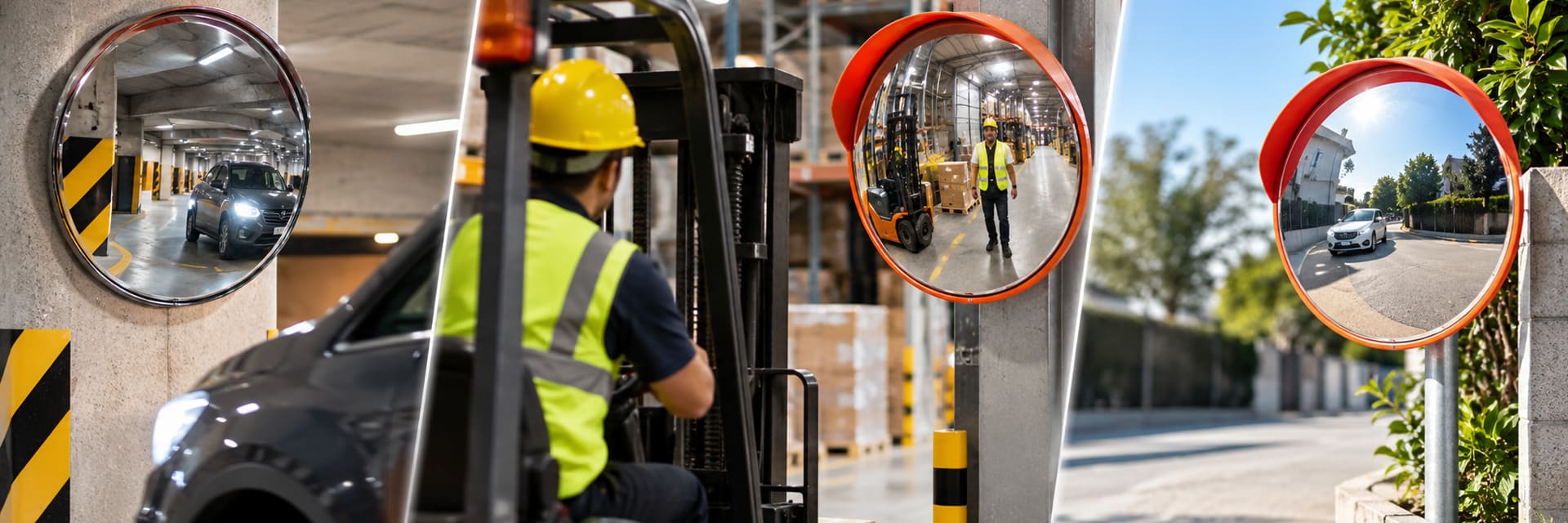
Accidents are not always caused by carelessness. In many cases, they happen because someone simply cannot see what is around the corner. Blind spots are a common issue in workplaces, car parking, warehouses, retail areas, and private driveways, where people and vehicles often share the same space. Without clear visibility, even routine movements can quickly become hazardous.
This is where safety mirrors can make a real difference. By providing a wider field of view, they help reveal hidden areas that would otherwise remain out of sight. Whether it is a forklift approaching a warehouse junction, a vehicle leaving a car park, or pedestrians moving through a busy corridor, improved visibility allows people to react sooner and make safer decisions.
In this guide, we explore how these visibility solutions support accident prevention, where they are most useful, what to consider when choosing one, and how correct installation can improve their effectiveness.
The Hidden Risks Created by Poor Visibility
Poor visibility is one of the most common causes of near misses and accidents in areas where people, vehicles and equipment move throughout the day. While obvious hazards often receive attention, blind spots can easily be overlooked because they are part of the normal layout of a building or outdoor space.
Without a clear line of sight, people may not realise someone or something is approaching until it is too late. This makes restricted visibility an important consideration when reviewing workplace and traffic safety.
Blind Spots Can Appear in More Places Than Expected
Blind spots are not limited to large industrial sites. They can occur in a wide range of environments, including:
- Warehouse aisles and racking systems
- Loading bays with regular vehicle movements
- Factory corners and production areas
- Retail stockrooms and service corridors
- Residential and commercial driveways
- Narrow access roads and site junctions
In these locations, people and vehicles are often moving at the same time. A delivery driver reversing, a forklift turning a corner, or a pedestrian stepping into a crossing point may all have restricted visibility. Blind spot mirrors can help address these difficult viewing areas by giving users an additional perspective before they enter a potentially hazardous zone.
Small Visibility Problems Can Lead to Bigger Consequences
Even a brief loss of visibility can have a significant impact. A vehicle emerging from a blind corner or a person walking into an unseen area may have only a few seconds to react. These situations can result in damaged property, disrupted operations, or, more importantly, injuries that could have been prevented.
Improving visibility does not always require major changes to a site. Identifying areas where sightlines are restricted and introducing practical visibility measures can make everyday movement safer.
The Role of Safety Mirrors in Everyday Accident Prevention
Convex safety mirrors are designed to improve visibility in areas where a direct line of sight is limited. Their curved surface provides a wider viewing angle, allowing users to see around corners and monitor spaces that would otherwise remain hidden.
Rather than replacing existing safety measures, traffic safety mirrors work alongside them. They can support sensible traffic management, warning signs, and safe working procedures by making hidden areas easier to observe before people or vehicles enter them.
A Wider View Makes Movement Safer
A well-positioned mirror can improve awareness in a variety of everyday situations. It helps users spot approaching people or vehicles earlier, making it easier to slow down, stop, or change direction when necessary.
Some of the key benefits include:
- Improving visibility around blind corners and junctions
- Helping drivers and forklift operators navigate more safely
- Reducing the risk of collisions in busy areas
- Making pedestrian routes easier to monitor
- Providing a practical way to address restricted sightlines
These advantages make wide-angle mirrors a useful addition for businesses and organisations looking to improve visibility without making major changes to their areas.
Everyday Situations Where They Make a Difference
Visibility solutions can be effective in many settings where direct sightlines are restricted. For example, a warehouse employee using a forklift can check for approaching pedestrians before turning into another aisle.
In busy car parking areas, drivers can see vehicles approaching from hidden angles before pulling out of a parking space. Similarly, staff moving goods through service corridors can benefit from improved awareness of people approaching from another direction.
Warehouse safety mirrors can therefore support safer movement around aisle intersections, loading areas and other high-traffic locations. In industrial environments, they can also complement existing traffic control measures where machinery and pedestrians operate close together.
Places That Benefit Most from Safety Mirrors
Safety mirrors are a practical solution wherever visibility is restricted. Although they are commonly associated with industrial sites, they can improve awareness in many different environments where people, vehicles or equipment move through shared spaces.
Some of the most common locations include:
- Warehouses and distribution centres – Improve visibility around shelving, aisle intersections and loading areas.
- Car parking – Help drivers see approaching vehicles at exits, ramps and tight corners.
- Factories and industrial facilities – Support safer movement where machinery, vehicles and pedestrians operate close together.
- Hospitals and healthcare facilities – Improve visibility along service routes and access points.
- Private and commercial driveways – Help users see oncoming traffic or pedestrians before entering a road.
- Site entrances and blind junctions – Reduce the likelihood of unexpected encounters between vehicles and pedestrians.
For industrial applications, industrial safety mirrors can be particularly useful in areas with frequent vehicle or equipment movement. Not every location requires the same type or size of mirror. Viewing distance, traffic levels, available mounting space, and whether the installation is indoors or outdoors should all be considered before choosing a suitable option.
Looking for practical safety solutions for your workplace? Visit Krucx to explore our full range of industrial and commercial products.
Installation Tips and Common Mistakes to Avoid
Even the best visibility mirror will not be effective if it is installed in the wrong position. Correct placement is essential to maximise the viewing area and ensure people can clearly see approaching vehicles, equipment or pedestrians.
To get the best results, keep these practical tips in mind:
- Install the mirror where it provides a clear view of the blind spot.
- Position it at a suitable height for the intended users.
- Angle the mirror carefully so it covers the area that cannot be seen directly.
- Check that signs, shelving, trees, or parked vehicles do not block the reflected view.
- Clean the surface regularly to remove dust, dirt, and water marks.
There are also a few common mistakes that can limit effectiveness:
- Choosing a mirror that is too small for the viewing distance
- Mounting it too high or too low
- Installing it where glare affects visibility
- Assuming one mirror can cover several separate blind spots
- Neglecting cleaning and maintenance in outdoor or industrial environments
The correct placement of convex safety mirrors is particularly important because their effectiveness depends on providing a useful view of the intended area.
A Simple Addition That Supports a Safer Environment
Creating a safer environment does not always require major building work or expensive equipment. Sometimes, small improvements can have a meaningful impact on everyday safety. Visibility mirrors are a good example, helping people identify potential hazards before they become a problem.
By improving visibility where blind spots exist, these solutions support smoother movement for drivers, pedestrians, and equipment operators. They can also encourage people to slow down and check their surroundings before entering shared areas.
Some of the key advantages include:
- Better visibility around blind corners and junctions
- Greater awareness of approaching vehicles and pedestrians
- Improved safety in areas with frequent movement
- A practical solution for indoor and outdoor settings
Whether installed in a warehouse, factory, school, hospital or car parking, traffic safety mirrors can contribute to a more organised and safety-conscious environment. They are most effective when used alongside sensible traffic management, clear signage and safe working practices.
Improve visibility and reduce collision risks with reliable safety mirrors from Krucx. Explore the range to find the right mirror for industrial and commercial environments.
Frequently Asked Questions
Q. Are Safety Mirrors Suitable for Outdoor Use?
Yes, many safety mirrors are designed for outdoor use and made from durable materials that can handle changing weather conditions. They are commonly used in car parks, loading bays, driveways, and site entrances.
Q. Which Size Safety Mirror Should I Choose?
The right size depends on the viewing distance, location, and required field of view. Larger mirrors are generally better for open areas and longer distances, while smaller options suit tighter indoor spaces.
Q. Can Safety Mirrors Help Reduce Workplace Accidents?
Yes, safety mirrors can improve visibility around blind corners and restricted areas, helping drivers and pedestrians spot approaching traffic. They work best alongside suitable safety procedures and signage.
Conclusion
Good visibility is one of the simplest yet most effective ways to support accident prevention. While hazards cannot always be eliminated, reducing blind spots allows people to make safer decisions and react more quickly to what is happening around them. Whether it is a busy warehouse, car parking, factory, retail area, or driveway, improving visibility can make everyday movement safer for everyone.
Safety mirrors offer a practical solution for environments where restricted sightlines increase the risk of collisions or near misses. When the right mirror is selected, installed correctly and maintained properly, it can become a valuable part of a wider safety strategy alongside clear signage, sensible traffic management and safe working practices.