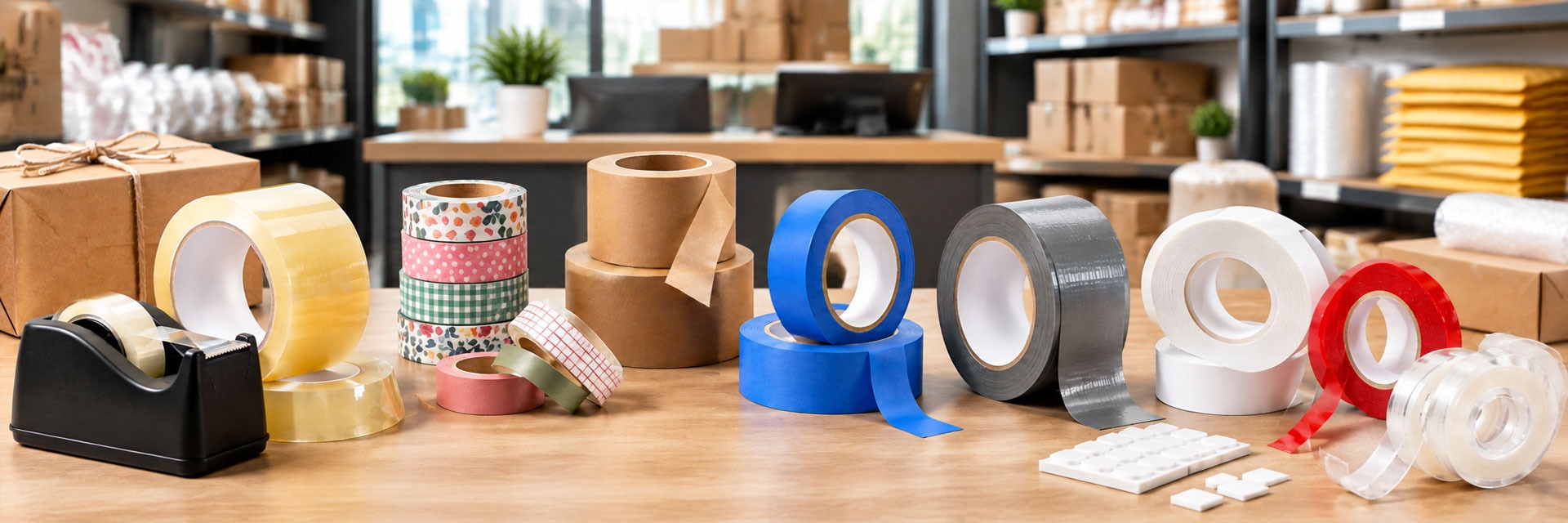
Tape looks like a small thing. But pick the wrong one, and you end up with a repair that falls apart, a floor mark that peels off in a week, or a warning line that nobody notices. The good news is that once you know what each type of tape is actually built for, choosing the right one becomes easy. This guide walks you through the most common types of industrial tapes, what they're best used for, and how to pick one without any guesswork.
Why the Right Tape Actually Matters
Not all tapes are the same, even if they look similar on a roll. Some are made to grip and stop slips. Some are made to stick two surfaces together permanently. Others are made to be seen from a distance as a warning. Using the wrong one in the wrong place usually means redoing the job, and sometimes it can even create a safety risk.
Think about a warehouse floor, for example. If you use standard sticky tape to mark a walkway, it will likely lift within days because it was never designed to handle constant foot traffic or forklift wheels rolling over it. Use the correct floor-marking tape instead, and it stays flat and visible for months. The same logic applies everywhere, from a home repair to a busy construction site.
Getting this right isn't complicated once you break it down by purpose:
- Safety tapes (grip, warning, marking)
- Bonding tapes (sticking things together)
- General-purpose tapes (repairs, packaging, wrapping)
Once you know which group your job falls into, choosing the specific tape becomes simple.
Tapes for Grip and Safety
If your main concern is slips, falls, or making sure people notice a hazard, this group is where you should be looking.
1. Anti-Slip Tapes
Anti-Slip Tapes have a rough, gritty surface that grips shoes even when a surface is wet, oily, or smooth. They're commonly stuck onto:
- Stairs and steps
- Ramps and loading areas
- Ladder rungs
- Workshop and warehouse floors
They're one of the cheapest and quickest ways to cut down on slip accidents, and most versions can be applied without any special tools.
2. Floor Tapes
Where anti-slip tapes are about grip, Floor Tapes are more about marking and organising space. Think of the coloured lines you see in warehouses showing walkways, forklift routes, or storage zones. They're built to handle foot traffic and light vehicle movement without lifting at the edges, which is exactly what makes them useful for:
- Marking walkways and lanes
- Colour-coding storage areas
- Highlighting temporary hazards on the floor
3. Barrier Tapes
When you need to keep people away from an area entirely, rather than just guide them, Barrier Tapes do the job. These are the bright, often striped tapes used to cordon off construction zones, wet floors, or restricted areas. They're not meant to bond to a surface — they're meant to be seen and respected as a boundary.
Tapes for Bonding and Holding Things Together
This next group is less about safety and more about strength. If you need two surfaces to stay joined, these are your options.
i) Double-Sided Tapes
As the name suggests, Double-Sided Tapes stick on both sides, so instead of wrapping around something, they hold two flat surfaces together invisibly. They're a favourite for:
- Mounting signs, mirrors, or panels
- Fixing carpet edges or rugs in place
- Craft and light industrial assembly work
Since there's no visible tape line once it's applied, they're especially useful when appearance matters as much as strength. Some heavier-duty versions are strong enough to replace screws or glue in light mounting jobs, which saves both time and mess.
ii) Adhesive Tapes
This is the broadest category, covering general-purpose sticky tapes used across homes, offices, and workshops. Adhesive Tapes are the ones you reach for when you just need something to stick, seal, or hold quickly, without needing a specialist product. They're flexible enough to use for:
- Sealing boxes and parcels
- Quick fixes and general holding jobs
- Bundling cables or materials together
- Tapes Built for Tough, Industrial Jobs
Some jobs need more than a standard sticky tape. They need something that can survive rough handling, heat, or heavy pulling.
iii) Industrial Tapes
Industrial Tapes are made for demanding environments where an ordinary tape would tear or lose its stickiness. They're commonly used in warehouses, factories, and on construction sites for jobs such as:
- Bundling pipes, cables, or heavy materials
- Temporary repairs on machinery or equipment
- Sealing in conditions with dust, moisture, or temperature changes
If a job involves rough handling or an outdoor setting, this is usually the safer choice over a standard tape. Many industrial-grade options are also resistant to UV exposure and temperature swings, so they hold up in outdoor storage yards just as well as inside a busy factory.
iv) Cloth Tapes
Cloth Tapes, sometimes called gaffer or duct-style tapes, are woven from fabric and coated with a strong adhesive. They're known for being easy to tear by hand while still holding firmly, which makes them useful for:
- Fast, no-tool repairs on-site
- Securing cables along floors or walls
- General workshop and event use
Their fabric backing also makes them more flexible than plastic-based tapes, so they wrap around uneven surfaces without cracking. This makes them a favourite with electricians, event crews, and anyone who needs a fast fix that still looks tidy.
How to Pick the Right One in Three Steps
If you're still not sure which tape fits your job, ask yourself these three questions:
- What's the main goal? Grip, marking, bonding, or general holding.
- Where will it be used? Indoors, outdoors, on a floor, on machinery, or in wet conditions.
- How long does it need to last? A quick fix calls for something different than a permanent installation.
Answering these narrows the choice down fast, and in most cases, points you straight to one of the categories above.
A Few Quick Buying Tips
Before you add a tape to your basket, it helps to check:
- The surface it needs to stick to (some tapes don't perform well on rough or oily surfaces)
- Whether it needs to be weatherproof, if it's going outdoors
- The width and length you actually need, so you're not stuck reordering halfway through a job
- Whether removal matters — some tapes leave residue, others peel away cleanly
- How much traffic or handling the area sees daily, since heavier use calls for a tougher grade
A little checking upfront saves a lot of frustration later, and it usually means you only have to buy the right tape once instead of twice.
Wrapping It Up
Tape isn't just tape. Whether you need grip on a staircase, a clean bond between two panels, or a tough wrap for an industrial repair, there's a specific type built for the job. Matching the tape to the task is really the whole trick — once you do that, the rest takes care of itself.
If you're ready to browse the full range, our Tapes category has all of these types in one place, sorted so you can find what you need quickly. And if you're after other trade essentials beyond tapes, feel free to explore everything we stock on the Krucx. We're always happy to help you find the right product for the job.